
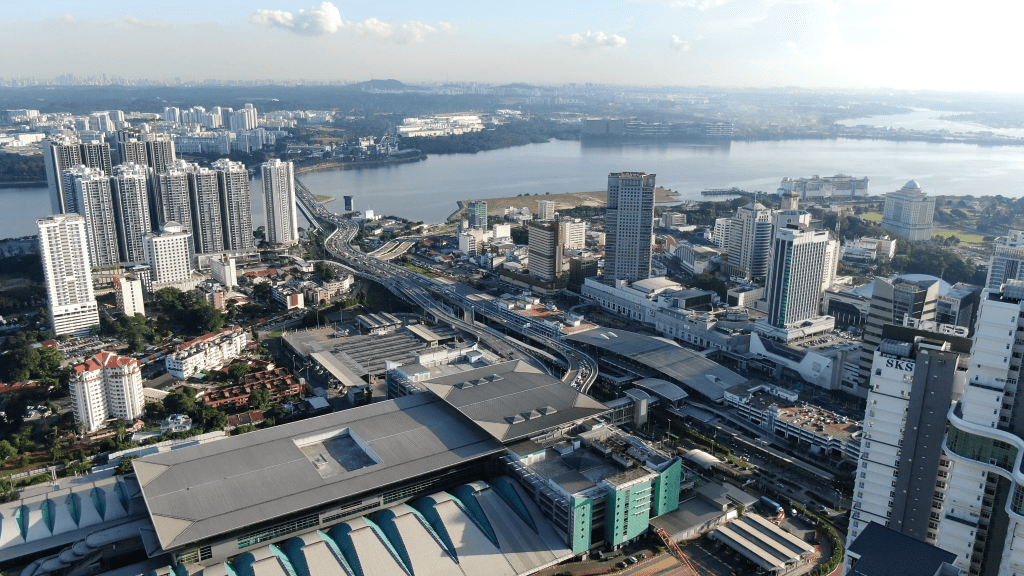
Driven by the wave of globalization, an increasing number of companies are choosing to “go abroad” in search of new growth areas and market opportunities. As a global trade and financial center, Singapore has attracted the attention of many enterprises. With the rise of the Iskandar Special Economic Zone (ISEZ), the collaboration between Singapore and Johor State in Malaysia has become a key pathway for businesses’ cross-border strategies. This regional cooperation has brought greater market opportunities, especially in the context of global corporate strategies. This article explores the core advantages provided by Singapore and ISEZ as dual engines in corporate expansion strategies.
I. Singapore: A Hub Role in Global Strategy
Singapore, with its advantageous geographical location, stable political environment, innovative financial system, and robust international network, has long been a strategic base for global enterprises. As a crucial global port and shipping hub, Singapore offers businesses a convenient gateway for global trade. More importantly, through a series of pro-business policies and tax incentives, the Singapore government has created an open and foreign-investor-friendly market environment, making it the top choice for global enterprises seeking to enter the Asia-Pacific region.
1. Policy Support and Tax Incentives
Singapore’s corporate tax rate stands at just 17%, one of the lowest in the world. Moreover, Singapore offers various tax deductions and incentives, particularly supporting foreign and innovative businesses. The government also runs various funding support programs, encouraging companies to expand globally.
2. Advanced Financial System
Singapore is one of the leading global financial centers, with a mature capital market and well-developed financial system. Enterprises can access global capital markets through Singapore and collaborate with local financial institutions to implement financing and international strategies.
3. Innovation and Digital Transformation
Singapore not only provides a global business environment but also actively promotes the digital economy and innovation-driven growth, becoming a hotbed for global technological innovation. Businesses in Singapore can enjoy efficient digital infrastructure and strong governmental support for high-tech innovations, enhancing their competitiveness in the global market.
II. Iskandar Special Economic Zone: A New Opportunity for Cross-border Cooperation
The Iskandar Special Economic Zone (ISEZ) is an economic cooperation zone between Singapore and Johor State in Malaysia, aimed at strengthening economic linkages between the two regions and promoting regional integration. Since its establishment, the ISEZ has not only become a strategic platform for companies expanding overseas but also provides unique opportunities for cross-border businesses.
1. Geographical and Economic Advantages
Located at the junction between Singapore and Malaysia, ISEZ connects the two countries’ economic systems. Companies can benefit from Singapore’s international environment and Johor’s lower operational costs, maximizing the cost-effectiveness of their global expansion. Additionally, the advantages of infrastructure development and logistics channels in ISEZ allow businesses to respond quickly to market demands.
2. Policy Synergy and Market Access
Companies within ISEZ can benefit from policies supported by both governments, making market access between Singapore and Johor more seamless. By leveraging the preferential policies of both governments, businesses can reduce administrative and tax costs in the internationalization process.
3. Supply Chain Integration and Production Base
For manufacturing and export-oriented businesses, ISEZ has become an ideal production base. Johor’s labor costs are lower than Singapore’s, while Singapore’s high-tech and high-value-added industries can be produced and assembled in ISEZ, enabling efficient supply chain integration. This cross-border cooperation model allows businesses to be more flexible and competitive in global supply chains.
III. Dual Advantages in Corporate Expansion: The Synergistic Effect of Singapore and ISEZ
1. Efficient Cross-border Operations
The joint layout of Singapore and ISEZ provides businesses with efficient cross-border operational channels. Companies can enjoy high-end financial services, policy support, and market access advantages in Singapore, while using ISEZ for low-cost production and operations, reducing overall cost burdens. This flexible business model enhances competitiveness in international markets.
2. Complementary Markets and Resources
Singapore’s international market and Johor’s local resources complement each other, forming a strong synergistic effect. Businesses can gain access to global markets through Singapore while leveraging Malaysia’s natural resources, affordable labor, and lower production costs in ISEZ, optimizing the combination of production and sales.
3. Bilateral Flow of Technology and Talent
Singapore is a key hub for global technological innovation, while Johor has a rich industrial manufacturing base. Companies in both regions can leverage ISEZ for the bilateral flow of technology and talent, driving industrial upgrades and technological innovation. This combination of innovation and production will help enhance a company’s comprehensive competitiveness in the global market.
Conclusion
As global economic uncertainties increase, the paths and choices for businesses expanding abroad are becoming more diverse. The cooperation between Singapore and ISEZ not only provides enterprises with strategic leverage but also offers multidimensional support and opportunities. Companies can access global resources through Singapore’s international platform, while achieving low-cost, efficient operations in ISEZ to further expand into the Asia-Pacific and global markets. Singapore and ISEZ, as dual engines, provide unprecedented strategic advantages for businesses expanding abroad, and this cooperative model will further drive their global development in the future.
 MaxVesta